Launch failure is structural. So is success.

Launch Failure Is Structural. So Is Success.

Most pharmaceutical launches do not fail because of isolated execution gaps. They fail because they enter pre-shaped market systems where the trajectory has already been influenced long before approval. These conditions are not random. They form repeatable structural patterns across therapeutic areas, asset types, and commercialization models. Cognisus identifies these patterns not as “segments,” but as recurring launch environments where trajectory risk is already embedded in the system.

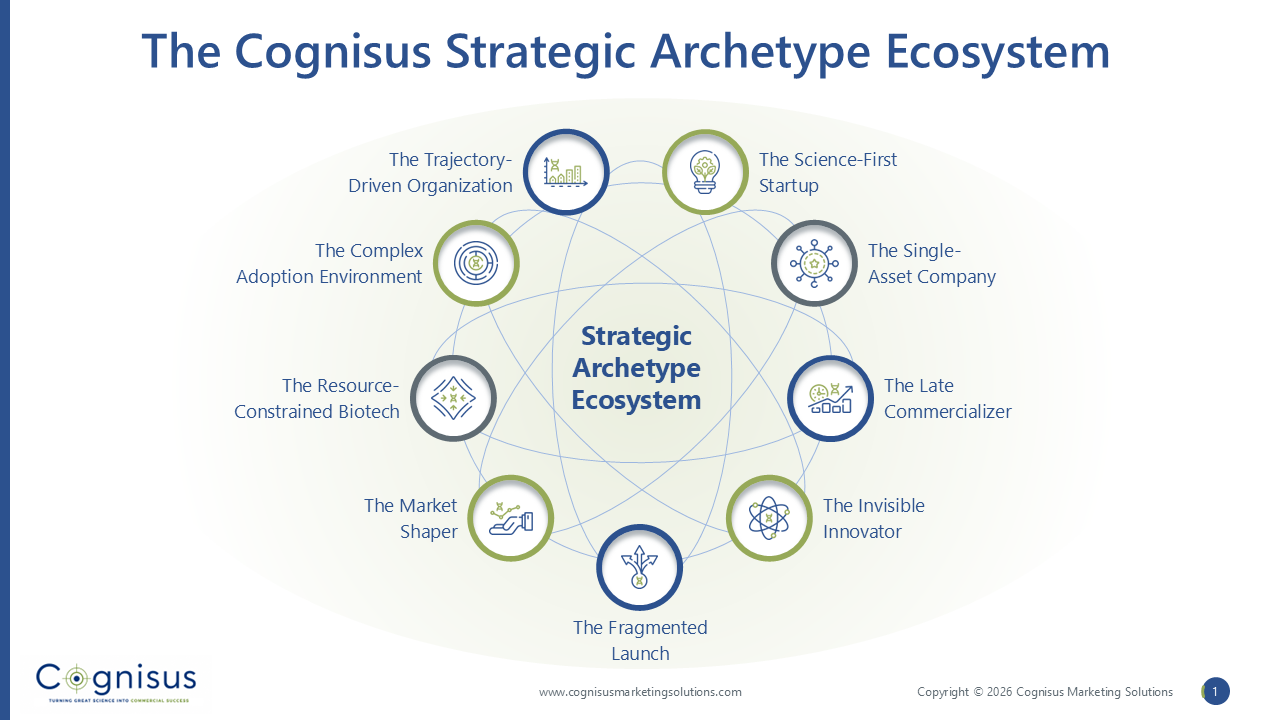
Nine Launch Environments Where Trajectory Risk Repeats

Across pharmaceutical and biotech markets, launch outcomes consistently cluster into recognizable structural environments. These are not categories of companies. They are conditions of market entry and adoption formation. Each reflects a different way in which:

  • Decision pathways are formed
  • Stakeholder behavior stabilizes
  • Competitive narratives become entrenched
  • The commercial trajectory becomes constrained before launch

Corporate meeting with formal discussion

The Science-First Startup

Structural Environment

A first commercial launch with limited institutional commercial infrastructure. Early-stage organizations often operate with strong clinical momentum but limited system-level commercial architecture. Decision pathways, stakeholder sequencing, and market conditioning are often not structurally established before approval.

System Conditions

  • Decision architecture is underdeveloped
  • Market conditioning has not yet formed
  • Capital allocation operates without unified prioritization logic
  • External vendor activity is fragmented across functions

System Focus

Establishing governed decision architecture, early market shaping logic, and structured stakeholder sequencing before the trajectory solidifies.

EX-US Pharma Entering the U.S. Market

Structural Environment

An established product enters a fundamentally different decision ecosystem where prior positioning does not transfer directly. The U.S. market operates under distinct payer dynamics, prescribing behaviors, and competitive reference frameworks.

System Conditions

  • Legacy positioning does not map to U.S. adoption behavior
  • Competitive context is redefined at the point of entry
  • Market interpretation occurs before engagement is structured
  • Visibility signals are uneven across stakeholder groups

System Focus

Recalibrating narrative structure, aligning to U.S. adoption pathways, and establishing early visibility systems that reflect local decision logic.

The Trajectory-Driven Organization

Structural Environment

A product enters the market but fails to establish early alignment of its trajectory within the first adoption cycle. At this stage, the market has already begun forming behavioral and perceptual stability.

System Conditions

  • Early prescribing habits have begun stabilizing
  • Competitive narratives have already formed
  • Messaging lacks structural coherence across channels
  • Corrective actions occur after trajectory formation

System Focus

Reconstructing alignment between decision systems, engagement sequencing, and narrative structure before constraints become irreversible.

The Resource-Constrained Biotech

Structural Environment

An organization with active commercialization but without an integrated decision architecture. Execution exists, but it is not governed as a unified system.

System Conditions

  • Activities operate in parallel without sequencing logic
  • KPIs exist, but are not structurally connected
  • Capital allocation is distributed across competing priorities
  • Signal interpretation is inconsistent across teams

System Focus

Re-establishing decision governance, sequencing discipline, and unified measurement architecture.

Specialty Brand Expansion

Structural Environment

A product expands into new indications or broader therapeutic settings. However, existing narrative structures do not scale across new decision contexts.

System Conditions

  • Category definition does not translate across specialties
  • Stakeholder interpretation varies across clinical settings
  • Evidence framing is not consistently structured
  • Adoption pathways diverge across sub-markets

System Focus

Reconstructing category narrative and aligning multi-context adoption logic across therapeutic environments.

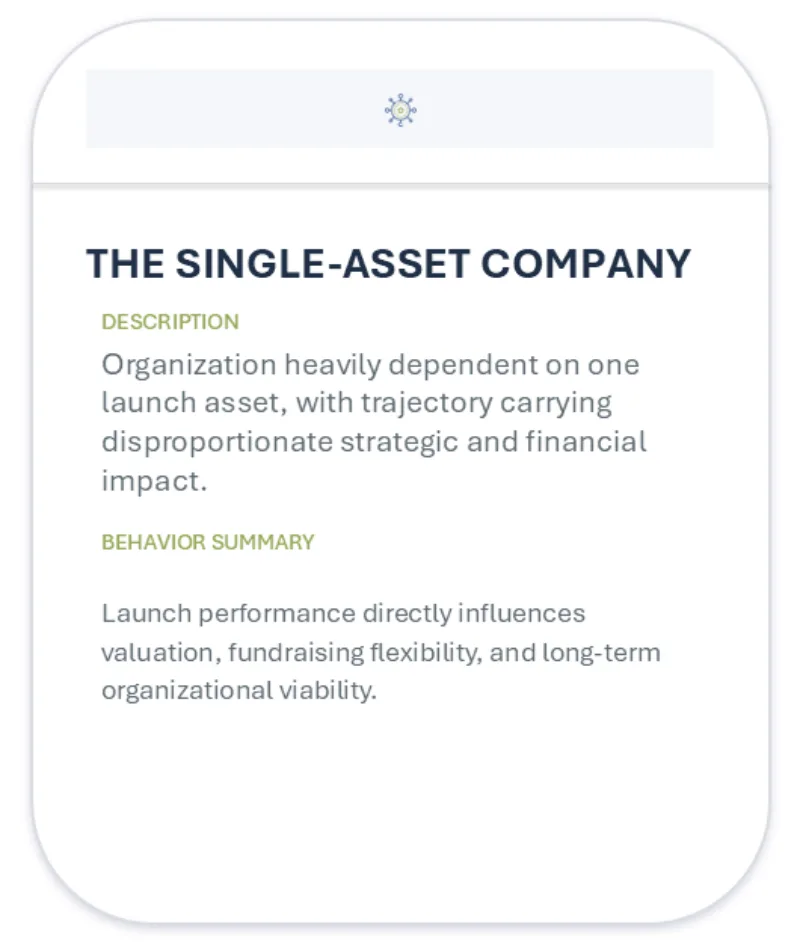
The Single-Asset Company

Structural Environment

A late-stage asset moves from clinical development into commercial readiness. At this stage, development decisions have already influenced commercial constraints.

System Conditions

  • Clinical decisions shape future positioning range
  • Commercial logic enters after structural commitments are made
  • Market readiness signals are not embedded early
  • Adoption pathways are not yet defined

System Focus

Embedding commercial structure upstream into development logic before market entry conditions become fixed.

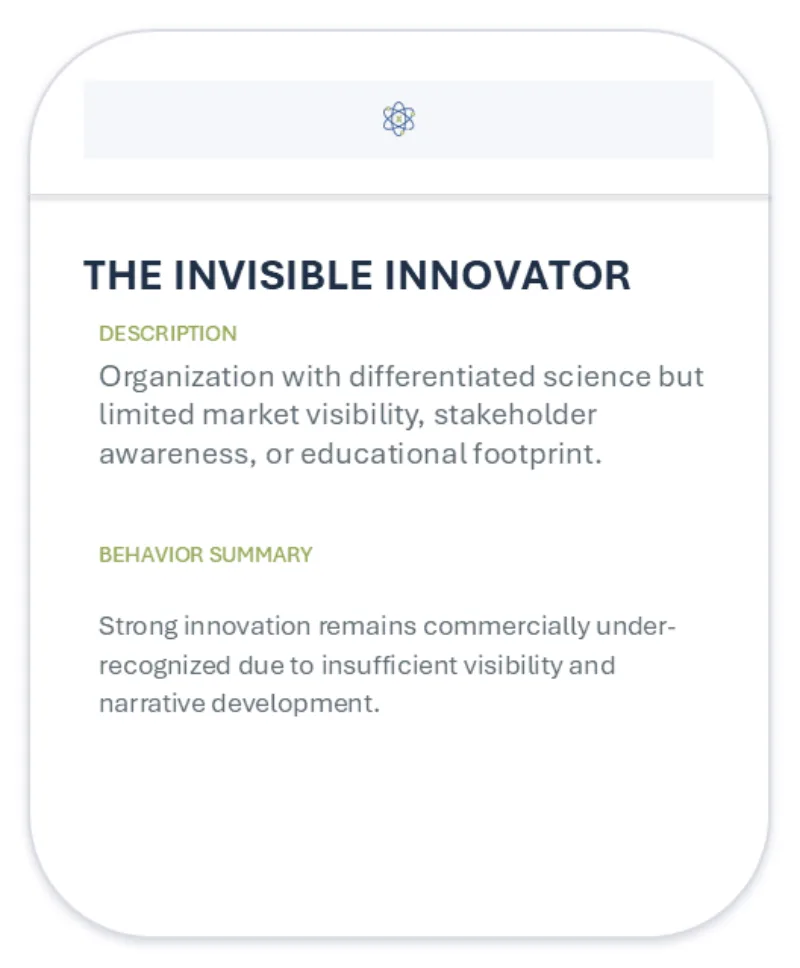
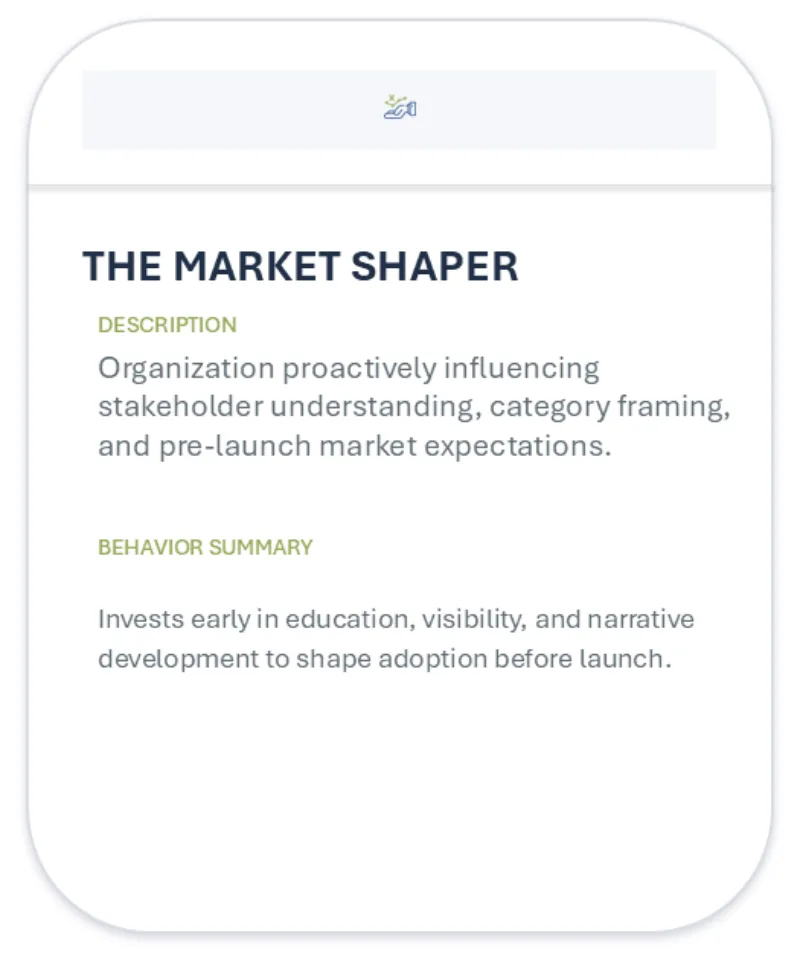
The Market Shaper

Structural Environment

A clinically strong asset exists without proportional market interpretation or awareness structure. Innovation exists, but it is not structurally legible to the market.

System Conditions

  • Clinical differentiation is not clearly interpreted
  • Awareness signals are inconsistent across stakeholders
  • Category positioning is undefined or fragmented
  • The market fails to form a coherent valuation framework

System Focus

Structuring interpretability, visibility logic, and category framing before competitive narratives stabilize.

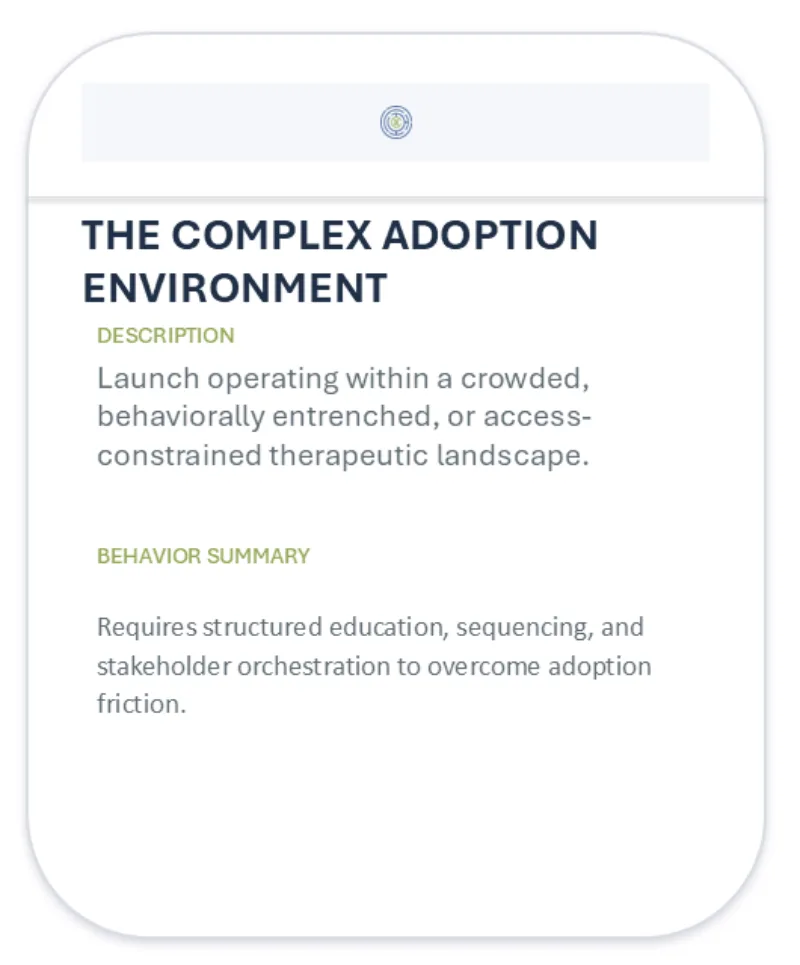
The Complex Adoption Environment

Structural Environment

A new entrant competes within an already stabilized therapeutic category. Interpretation frameworks are defined by incumbents.

System Conditions

  • Evaluation criteria are already established
  • Competitive reference points dominate perception
  • Differentiation is measured against legacy benchmarks
  • Market entry occurs within predefined narratives

System Focus

Reframing category logic and reshaping evaluation criteria before comparison structures lock in.

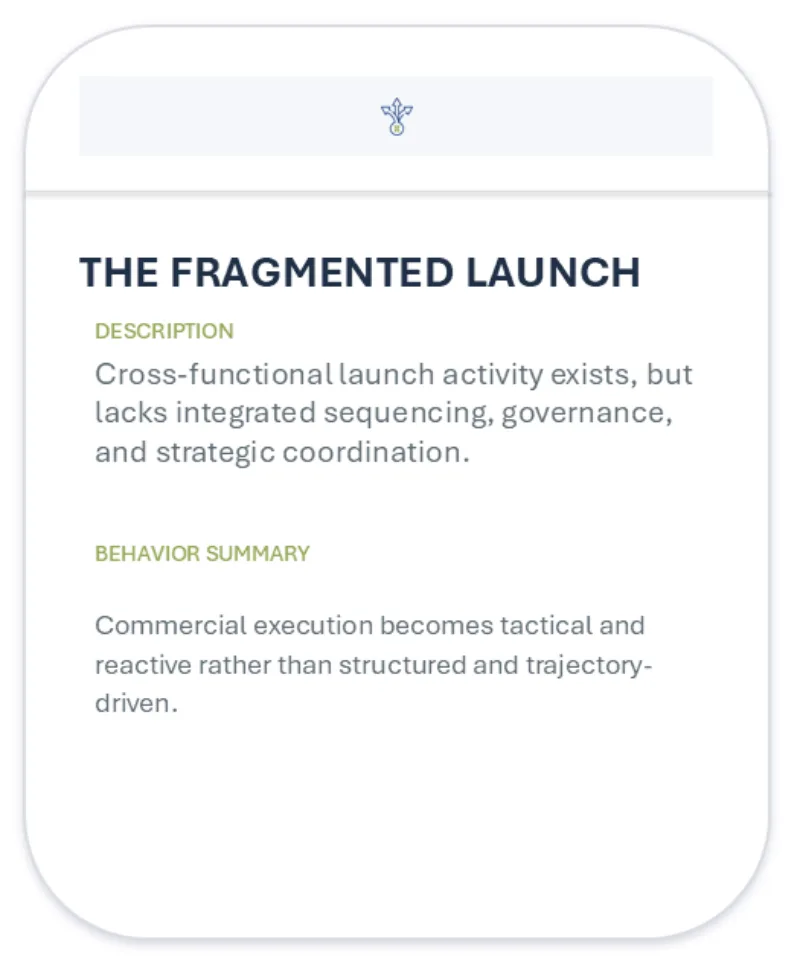
The Fragmented Launch

Structural Environment

A product enters the market but fails to achieve the expected early adoption velocity. The initial trajectory has already formed below the target.

System Conditions

  • Prescribing behavior has stabilized at suboptimal levels
  • Market perception has hardened
  • Corrective interventions face structural resistance
  • Competitive positioning has already advanced

System Focus

Identifying structural adoption barriers and reconstructing engagement sequencing within constrained trajectory conditions.

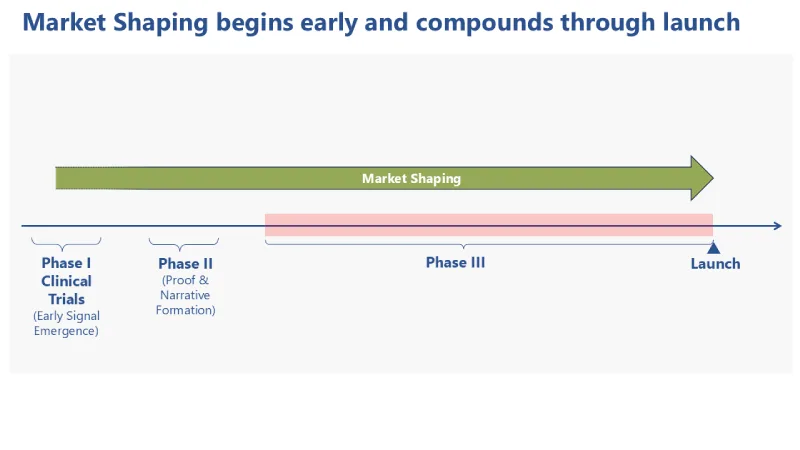
Market Shaping begins early and compounds through launch

From Pattern Recognition to Structural Intervention

Recognizing launch environments is not the objective. The objective is to identify how:

  • Decision systems are formed
  • Narratives become stabilized
  • Adoption pathways are structured
  • The trajectory becomes constrained before execution begins

Cognisus operates at this level where launch outcomes are structurally determined, not tactically adjusted.

Pharma Launch Gap Analysis

Identify structural barriers, adoption risks, and commercialization gaps that may limit launch performance before they become visible in the market.

What You’ll Receive

A focused discussion of potential vulnerabilities and opportunities across the commercialization journey.

Skip to content