

Fragmented Decision Architecture
Launch decisions are often made across disconnected functions without a governing structure. Positioning, evidence strategy, stakeholder engagement, and capital allocation evolve independently rather than as part of a unified system. This fragmentation is not immediately visible, but it determines how effectively a launch performs. And this is where early structural misalignment begins to affect execution.
Launch Risk Diagnostic
Many commercialization challenges originate from fragmented planning rather than inadequate execution. When critical commercialization decisions are made independently across functional areas, organizations often create unnecessary complexity and weaken launch effectiveness. Organizations frequently optimize individual commercialization activities while overlooking the structural interdependencies that determine overall launch performance. Without an integrated decision architecture, isolated improvements rarely translate into sustained commercial success. The Cognisus Launch Risk Diagnostic helps organizations identify fragmented commercialization decision-making, prioritize corrective actions and establish a more coordinated commercialization architecture before launch.
Mis-Sequenced Commercial Priorities
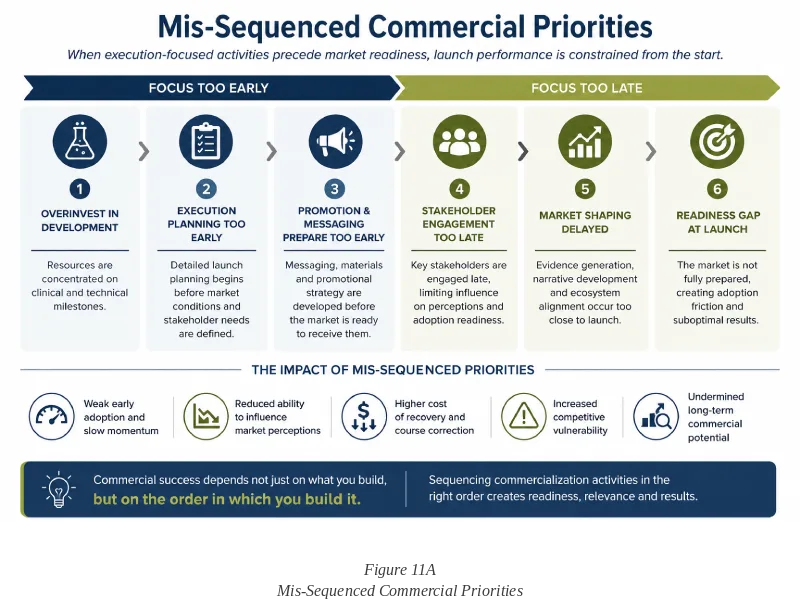
Without structured prioritization, launch activities are executed in parallel rather than in sequence. Market shaping, stakeholder education, and visibility development are often delayed until late stages. By the time execution begins, the conditions required for adoption have not been established. And this is why even well-funded launches struggle to gain early traction.

Delayed Market Shaping and Narrative Formation
Markets are not neutral at launch. In the absence of early narrative development, competitor positioning strengthens, and prescribing behavior stabilizes. Perceptions are already shaped before launch begins. This creates adoption resistance that cannot be corrected through late-stage promotion. And this is where the early trajectory begins to lock in.
Successful commercialization begins well before launch through deliberate market shaping. Building awareness, stakeholder confidence and market readiness early creates the conditions that support stronger adoption following launch. Organizations that postpone market shaping until launch frequently encounter greater adoption resistance, slower market acceptance and reduced commercial momentum. Market expectations are established long before products become available.
The Cognisus Market Shaping Timeline provides a structured approach for engaging stakeholders, building market confidence and strengthening commercialization readiness throughout the pre-launch period. Preparing the market before launch strengthens commercialization readiness, but organizations must also establish and protect early commercial trajectory once launch begins.
Capital Deployment Without Prioritization Logic
Commercial investment is often distributed across multiple initiatives without a clear decision hierarchy.
As a result:
- High-impact activities are underfunded
- Low-yield efforts consume resources
- Execution lacks directional focus
This does not reduce activity. It reduces impact. And this is why execution intensity alone does not improve performance.
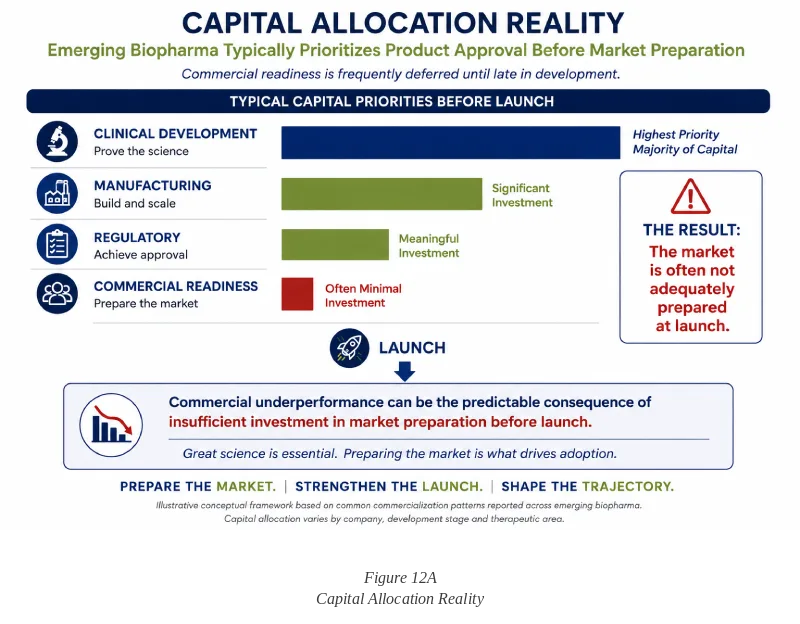
Commercial success is influenced not only by how much organizations invest, but by when and where commercialization resources are deployed. Investment decisions that prioritize late-stage execution over early market readiness frequently limit launch performance before commercialization even begins.
Organizations often allocate significant resources to downstream commercial activities while underinvesting in the foundational capabilities that shape stakeholder confidence, market preparedness and early adoption. This imbalance reduces the overall effectiveness of commercialization investment regardless of total spending.
The Cognisus Capital Allocation Reality framework illustrates how strategic investment aligned with commercialization priorities strengthens market readiness, improves launch efficiency and increases the probability of sustainable commercial success.
Loss of Early Trajectory Control
When structural issues persist into launch:
- Early signals become reactive, not predictive
- Adoption lags behind expectations
- Competitive positioning strengthens
- Strategic flexibility narrows
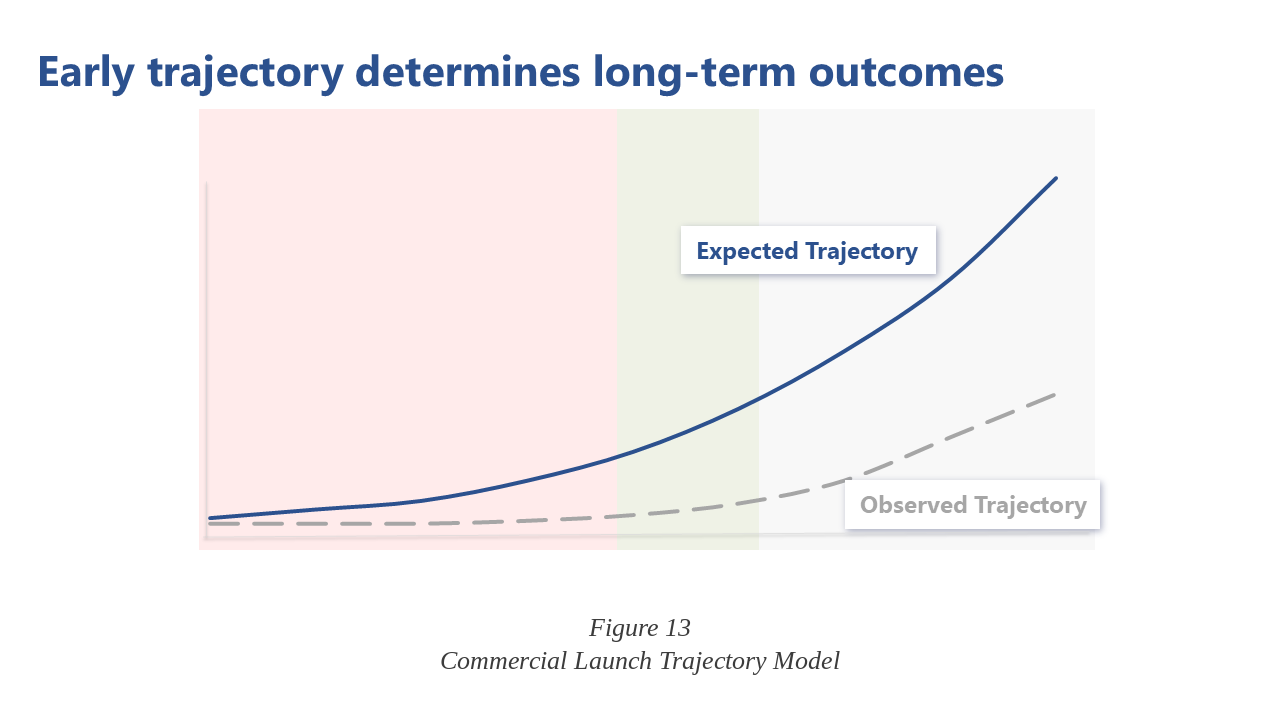
Recovery becomes progressively more difficult as market behavior stabilizes.
Early Commercial Trajectory Determines Long-Term Outcomes
The commercial trajectory established during the earliest stages of launch frequently determines long-term market performance. Early prescribing patterns, stakeholder confidence and market adoption create momentum that becomes progressively more difficult to change over time. Organizations often focus on correcting performance after launch rather than shaping the conditions that determine trajectory before launch. Once adoption patterns become established, recovery requires substantially greater time, effort and investment. The Cognisus Launch Trajectory Model helps organizations strengthen early commercialization decisions, improve stakeholder readiness and establish the conditions for stronger, more sustainable commercial performance.
Understanding early commercial trajectory highlights the importance of addressing commercialization as an integrated system rather than a collection of independent activities.
The structural challenges described above are interconnected. Addressing them requires a coordinated commercialization system in which strategic decisions, market preparation, stakeholder engagement, execution, and performance feedback reinforce one another.

Launch underperformance is not the result of isolated issues. It is the outcome of structural conditions established before execution begins.
Pharma Launch Gap Analysis
Identify structural barriers, adoption risks, and commercialization gaps that may limit launch performance before they become visible in the market.
What You’ll Receive
A focused discussion of potential vulnerabilities and opportunities across the commercialization journey.
General Contact
Not sure where to begin? Let’s discuss your commercialization challenge and determine the most appropriate next step.
What You’ll Receive
An initial conversation focused on your objectives, challenges, and opportunities.